Mastering Content Taxonomy: A Strategic Framework for 2026 SEO Success
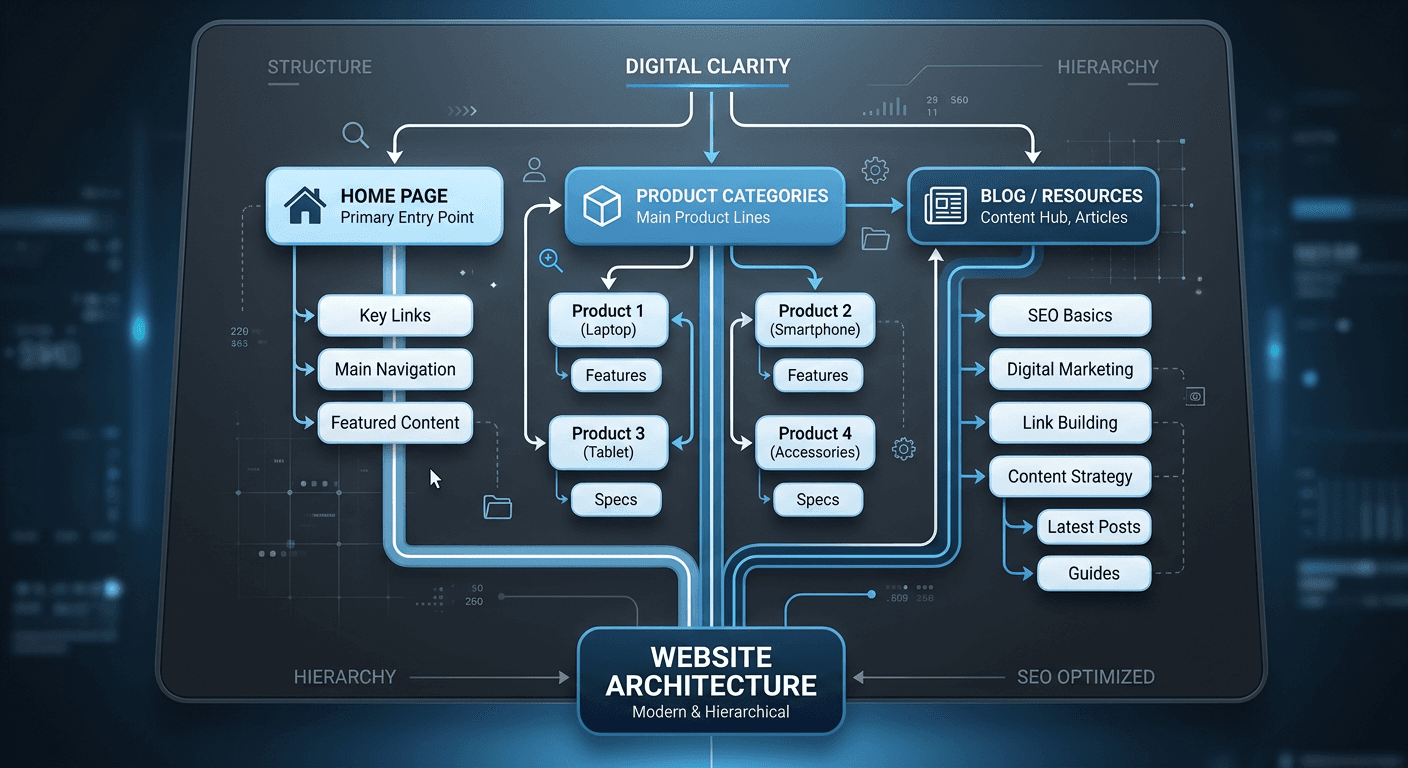
Building a robust content architecture is essential for modern search engines to interpret the topical authority and semantic relationships within your website. Without a logical framework, even the most high-quality writing risks being buried by algorithmic confusion. Implementing a disciplined content taxonomy allows search crawlers to map your information hierarchy effectively, ensuring that your content marketing efforts contribute directly to your domain's topical footprint and search visibility.

Quick Summary
Content taxonomy is the systematic classification and organization of website information into hierarchical categories and tags. By structuring content logically, you enhance crawlability, improve user experience, and signal topical depth to search engines, which is critical for securing AI-driven search citations.
- Increases semantic clarity for LLMs and search engines.
- Enhances user navigation and internal linking potential.
- Facilitates data-driven content analysis for performance tracking.
- Enables scalable growth by creating a predictable URL structure.
Table of Contents
- Quick Summary
- The Strategic Importance of Content Taxonomy
- Developing a Semantic Hierarchy
- Step-by-Step Implementation of Taxonomy
- Tools for Content Analysis and Maintenance
- Common Pitfalls and Troubleshooting
- FAQ
- Recommended Reads
The Strategic Importance of Content Taxonomy
At its core, a well-defined taxonomy acts as the skeletal system of your digital presence. It transforms a collection of disparate articles into a cohesive knowledge base. When you categorize content with precision, you provide search engines with clear context regarding your expertise. This process is foundational for AI search optimization, as LLMs rely heavily on the structural metadata and categorical silos to determine which entities a website covers with authority.
Effective taxonomies move beyond simple folders. They integrate parent-child relationships, sub-categories, and tag clouds to show the breadth and depth of a niche. By doing this, you avoid keyword cannibalization and ensure that specific search intents are addressed by the most relevant pages, which is a key component of modern content marketing strategy. When your site is structurally sound, you spend less time fixing indexing issues and more time scaling your content production.
Developing a Semantic Hierarchy
Developing a semantic hierarchy requires an intimate understanding of how your audience searches. Before creating categories, conduct a thorough content analysis to identify primary hubs (pillar pages) and secondary clusters. A strong hierarchy typically follows a "broad to narrow" approach, where the root domain leads to primary categories (broad topics) that further branch into sub-categories (specific themes) and finally individual articles.
Mapping Entity Relationships
When defining your hierarchy, focus on entities rather than just keywords. Consider how topics relate to one another in the real world. For instance, if your site focuses on software development, your hierarchy should reflect the logical flow from high-level languages to specific frameworks and technical troubleshooting guides. This relationship mapping helps search engines understand the context of each piece of content, significantly increasing the likelihood of appearing in relevant knowledge graphs.
Step-by-Step Implementation of Taxonomy
Implementing a taxonomy should be a deliberate, step-by-step process. Rushing this phase often leads to "orphan pages" and fragmented site architecture that confuses both users and automated crawlers.
- Audit Existing Assets: Begin by exporting your current URL list. Group existing articles based on their primary intent and target audience.
- Define Parent Categories: Establish 3 to 7 primary categories that cover the main pillars of your business. These should be broad enough to house future content but specific enough to act as topical hubs.
- Design the URL Structure: Ensure that your URL structure mirrors your taxonomy. A clean structure like
domain.com/category/sub-category/article-nameis easily parsed by search bots. - Apply Taxonomic Metadata: Use schema markup and internal linking to explicitly connect tags and categories. This signals to search engines that these pages are part of a unified topical cluster.
- Automate Governance: Once the structure is set, establish rules for new content. Every new post must be assigned to an existing parent category or require a justification for creating a new sub-category.
Pro Tip: Do not over-categorize. A bloated taxonomy with too many categories containing only one or two articles signals thin content to search engines. Stick to a robust, lean structure where every category has depth.
Tools for Content Analysis and Maintenance
Periodic audits are mandatory to maintain a healthy taxonomy. Use analytics platforms to track the performance of your category clusters. If a particular category shows declining traffic, it may be time to perform a content analysis to see if the information is outdated, or if the taxonomy itself needs to be reorganized to reflect current search trends.
Maintenance tools often include crawlers that visualize site structure. By looking at a site map visualization, you can quickly identify "depth issues," where important content is buried too deep in the hierarchy to be crawled efficiently. Keeping this structure flat and logical ensures that your high-value pages receive the necessary crawl budget to maintain their rankings.
Common Pitfalls and Troubleshooting
The most common error is the "tag explosion" phenomenon, where creators generate new tags for every minor topic, leading to thousands of thin, indexed tag pages. This dilutes your authority and confuses search crawlers. To fix this, regularly prune your tags and ensure that you are using taxonomies for grouping and tags only for minor, non-essential attributes.
Another issue is broken internal linking. If you move an article to a new category, ensure the breadcrumbs and links are updated. Discrepancies between the URL path and the actual category structure can lead to crawl errors and a poor user experience. Always use a 301 redirect if you choose to reorganize your taxonomy to preserve the ranking power of existing pages.
FAQ
How many categories should my website have?
While there is no fixed rule, most effective sites limit their primary categories to between 3 and 7 to maintain topical focus and authority.
How often should I audit my site structure?
Aim for a quarterly audit to ensure that your taxonomy still aligns with current search patterns and your business objectives.
Does taxonomy impact AI search results?
Yes. AI and LLMs use structural signals to understand the relationship between topics. A clear taxonomy makes it easier for these systems to categorize your content accurately.
Can I use both categories and tags?
Yes, but use them for different purposes. Categories are for broad, hierarchical organization, while tags are for minor, descriptive linking across different categories.