Advanced Strategies for SEO Keyword Clustering
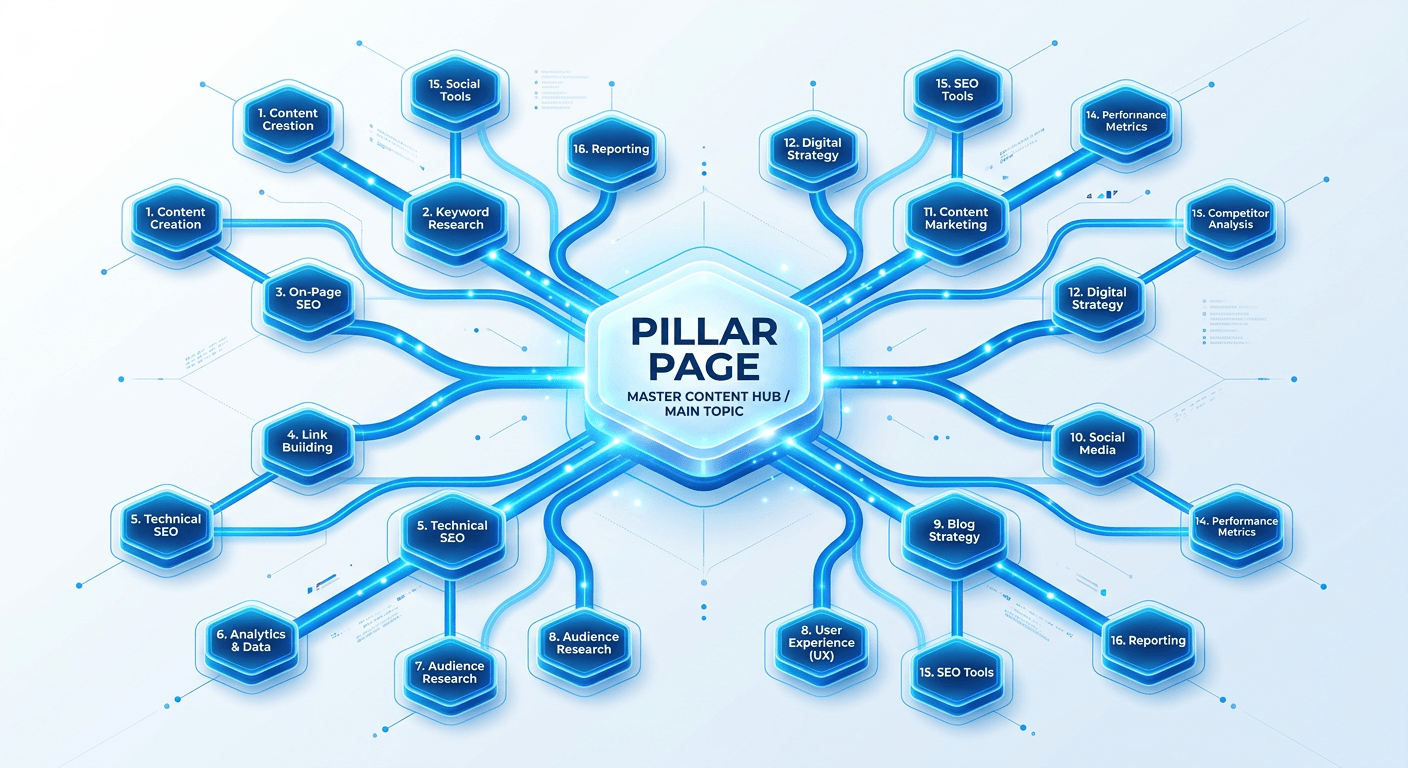
Mastering seo keyword clustering is the modern bedrock of sustainable search engine visibility, moving beyond the outdated practice of single-keyword targeting toward topical authority. By grouping semantically related search terms into comprehensive content hubs, site owners can satisfy user intent more effectively while mitigating the technical pitfalls of fragmenting their domain authority.
Quick Summary
SEO keyword clustering is the practice of grouping semantically related keywords into a single, high-quality page or content hub to cover a specific topic comprehensively. This strategy signals topical expertise to search engines, prevents internal competition, and structures content to match complex user search intent effectively.
- Increases topical authority by covering broad subjects in depth.
- Prevents seo keyword cannibalization by focusing multiple variations on one authoritative page.
- Improves user experience through logical content architecture.
- Streamlines keyword optimization in seo by aligning content with searcher intent rather than exact-match strings.
Table of Contents
- The Mechanics of SEO Keyword Clustering
- Preventing SEO Keyword Cannibalization
- Developing a Sustainable Keyword Strategy
- Addressing SEO and Duplicate Content Concerns
- Advanced Techniques for Keyword Optimization in SEO
- Real-World Implementation Insights
- Frequently Asked Questions
- Recommended Reads

The Mechanics of SEO Keyword Clustering
At its core, seo keyword clustering relies on the realization that search engines no longer rank individual pages for a single keyword, but rather evaluate the relevance of a page against the entire breadth of a topic. Clustering involves taking a high-volume head term and associating it with a cluster of long-tail variations, synonyms, and intent-based queries. By consolidating these into a single, massive resource—often referred to as a pillar page—you provide a single definitive answer to a user's problem.
When you implement this, you reduce the number of thin, low-value pages that often plague older content strategies. Instead of fighting for rankings with ten different pages that all discuss minor variations of the same subject, you create one page that carries the weight of all those keywords. This allows you to explore the RapidWombat AI terms of engagement for your site's architecture, ensuring that your technical foundation supports your topical depth rather than obscuring it.
Preventing SEO Keyword Cannibalization
Seo keyword cannibalization occurs when multiple pages on a single domain target the same search query, effectively splitting the site's authority and confusing search engines about which URL is the canonical source of truth. When two pages compete for the same intent, they rarely perform as well as a single, consolidated page would.
To resolve this, audit your existing content to identify pages with overlapping keyword profiles. Once identified, you should merge the content, perform a 301 redirect from the lower-performing pages to the main pillar page, or re-optimize the secondary pages to focus on unique, non-competing long-tail queries. Protecting your internal ecosystem is vital; review your privacy policy and site guidelines to ensure your technical SEO controls, like canonical tags, are correctly implemented alongside your content consolidation efforts.
Developing a Sustainable Keyword Strategy
An effective keyword strategy requires shifting your mindset from "getting ranked" to "providing value." Start by mapping your target topics to the user journey: informational, navigational, commercial, and transactional. Each cluster should ideally address a specific stage of this journey, ensuring that your content provides a clear path for the user to follow.
Pro Tip: Do not just group keywords based on search volume; group them based on search intent. If a user looking for "how to bake bread" is grouped with a user searching for "best bread makers," the resulting page will lack focus and fail to convert either audience.
Use tools to analyze the SERPs for your target clusters. If the top-ranking results for your core terms are listicles, your pillar page should follow a similar structure. If they are tool-based or interactive, your cluster should prioritize providing that functionality.
Addressing SEO and Duplicate Content Concerns
Commonly, marketers worry that creating multiple pages around similar keywords will trigger seo and duplicate content penalties. While Google rarely imposes manual penalties for duplicate content, it does ignore pages that lack unique value. Clustering is the natural solution to this: by consolidating related concepts, you ensure each page on your site has a distinct, authoritative purpose.
If you find yourself with multiple pages that are fundamentally the same, you must perform a consolidation project. Ensure that your main portal remains the central hub for your most critical topics, while secondary pages provide niche-specific details that add depth rather than redundancy. This strategy reinforces your domain authority by showing search engines that you are an expert, not a content farm.
Advanced Techniques for Keyword Optimization in SEO
Beyond basic grouping, modern keyword optimization in seo involves semantically rich content. This means including latent semantic indexing (LSI) keywords, related questions (People Also Ask), and entity-based associations that provide context to your primary subject.
Focus on internal linking as the glue for your clusters. Your pillar page should link to every cluster page, and every cluster page must link back to the pillar. This "hub-and-spoke" model creates a tight cluster of content that search engines can easily crawl and index, distributing authority effectively throughout the site.
Pro Tip: Use descriptive anchor text for your internal links. Instead of "click here," use the specific keyword phrase that the destination page is targeting to provide clear contextual signals to the search engines.
Real-World Implementation Insights
In practical application, the biggest challenge is letting go of legacy content. It is tempting to keep a mediocre page because it has a few backlinks, but if that page is cannibalizing a stronger, newer page, it is a liability. Focus on metrics such as "time on page" and "organic sessions per cluster" rather than just individual keyword rankings.
Monitor your search console data regularly to identify "keyword bleeding," where a page begins to rank for a term that should belong to another cluster. Addressing these shifts immediately prevents the slow erosion of your site’s topical authority. Remember that SEO is an iterative process; review your clusters quarterly to add new, trending sub-topics that emerge in your industry.
Frequently Asked Questions
How does keyword clustering impact site speed and technical SEO? Clustering simplifies your navigation, often leading to a flatter, cleaner site structure. While clustering itself is a content-focused strategy, it indirectly benefits technical SEO by reducing the need for an excessive number of indexed pages.
How many keywords should go into a single cluster? There is no fixed limit. A cluster should be as large as the topic requires to be authoritative. If you find your cluster page exceeding 5,000 words or becoming unfocused, it may be time to break it into a sub-cluster.
Is it possible to over-optimize a cluster? Yes. Keyword stuffing remains a risk, even within clusters. Ensure your content reads naturally and answers the user's intent first; the clustering is a framework for organization, not a license to repeat phrases.
How do I decide which page is the pillar and which is the cluster? Your pillar page should be the broadest, most high-level resource. Cluster pages should go deeper into specific, narrower sub-topics within that main category.